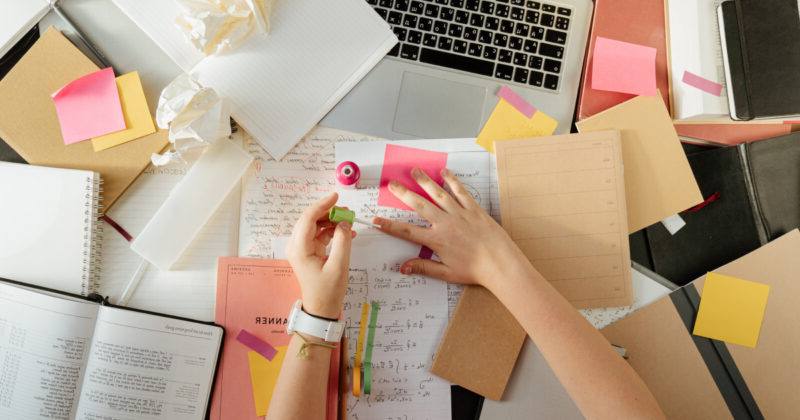
Preparing for the school year is a serious challenge for both children and their parents Among many tasks, you still need to find time to buy school notebooks. To make this task easier, let’s go over the key points to consider when choosing this essential school supply
It’s not a good idea to buy the first notebook you come across. You need to examine it and understand its quality and whether it meets the student’s needs. In elementary grades, a lot of attention is given to handwriting, so the paper must meet high standards. Sheets should not be overly white or glossy and all lines should be clearly visible. This helps protect the child’s eyesight and reduces fatigue
Let’s break down what to pay attention to when selecting notebooks
Size
The standard size is 205 mm by 170 or 148 mm. For these sizes it’s easy to find notebook covers. However, notebooks can also come in A4 and A5 formats
In early grades, notebooks usually have 12 sheets, occasionally 18 or 24. Thicker notebooks are unnecessary. First, they make the backpack heavier, second, the child may not finish it during the semester. Thin notebooks are easier to manage and more convenient for taking notes
In middle school, children start writing much more, so the number of sheets increases. The most popular are 48-page notebooks. Thicker notebooks are also needed but mainly in higher grades
Paper weight
This affects how easily a child can write. It’s especially important for those just learning to write. The optimal paper weight for school notebooks is 55–75 g/m². These sheets feel thinner than office paper
To prevent writing from showing through to the other side, a weight of 80 g/m² is recommended. This is similar to standard office paper used in printers
Lines
School notebooks can have several line types:
- Squared;
- Lined;
- Slanted;
- Slanted with frequent angle lines.
Lines can come in different colors. It’s best to choose gray green or blue shades. Quality can be judged by line clarity. Lines should not break blur or have defects. If lines are faint or smudged, it will be difficult for the child to write. If too bright, they may blend with ink. A sign of good quality is that lines align on facing pages
Binding
Thin notebooks (up to 24 sheets) use staples for binding. Thicker notebooks can have spiral or ring bindings
Cover
For first graders, simple covers without bright prints are best. Minimalist designs help children focus on learning. However, if focus is not an issue, covers with favorite cartoon characters animals or other prints are fine. Standard notebook covers are made of cardboard for durability
Choosing notebooks, writing supplies, and other stationery for a student should be done carefully. This affects the child’s comfort and health









Be First to Comment