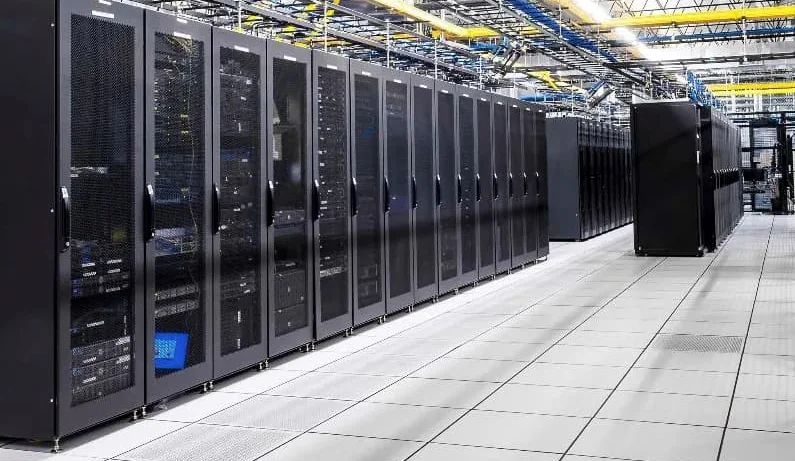
Given the growing volumes of data and the demands for their processing, choosing the right hard drive is not just about storage—it’s about ensuring efficient server performance. Let’s review the key parameters to consider when selecting an HDD on the Servak website.
Spindle Speed
Spindle speed affects data access times and overall disk performance. For server solutions, common speeds are 7,200 RPM, 10,000 RPM, and 15,000 RPM. Higher spindle speeds provide faster access to data, which is critical for tasks that require high performance.
Connection Interface
Modern servers most commonly use the following interfaces:
- SATA;
- SAS;
- NVMe.
NVMe stands out for its high performance thanks to direct connection to the PCIe bus, offering data transfer speeds several times faster than SATA and SAS.
Capacity and Data Density
The capacity of an HDD determines how much data it can store. Servers intended for large data storage require drives with higher capacities.
Data density measures the amount of data that can be stored per unit area of the disk surface (e.g., per square inch of the disk platters). Higher density generally results in faster read/write speeds.
Reliability and MTBF (Mean Time Between Failures)
Reliability is crucial for server HDDs, as it affects the uninterrupted operation of the entire server infrastructure. One key reliability metric is MTBF, which estimates the average operating time before a failure occurs. When choosing a server hard drive on Servak, consider:
- MTBF value. Look for drives with a high MTBF, indicating long-term reliability. For server drives, this often exceeds 1 million hours.
- Data protection technology. Some drives include ECC (Error Correction Code) and other features to correct errors during read/write operations.
- Vibration resistance. In server racks with multiple drives running simultaneously, vibration resistance helps prevent operational failures.
Taking these factors into account reduces the risk of unexpected HDD failures and ensures uninterrupted server operation.
RAID Support
RAID technology allows combining multiple drives into a single logical volume for improved performance and/or reliability. RAID support is essential for servers where high data availability and fault tolerance are required.
Power Consumption and Heat Output
Power consumption and heat output affect overall server energy efficiency and cooling requirements. When selecting a drive, consider these parameters to minimize electricity and cooling costs.
Price and Total Cost of Ownership (TCO)
The price of a hard drive and its total cost of ownership—including power, cooling, and maintenance—are key factors in selection. Choosing a drive with an optimal price-to-performance ratio helps optimize your server equipment budget.









Be First to Comment