
Since the release of the first iPhone in 2007 this smartphone series has never stopped surprising and attracting the attention of millions of users around the world. Every year Apple delights its fans with new models improving their functionality design and performance. Today in our blog we want to present a complete list of all existing iPhone models starting from the original iPhone to the latest releases. We will review the main features of each model the history of their release and highlight which ones became icons of style and technological achievement.
iPhone lineup up to iPhone 6s
The first iPhone models were a true revolution in the world of mobile devices. Starting with the original iPhone in 2007 Apple gradually enhanced its smartphone adding new features and technologies. Each subsequent model brought improvements in design performance and user convenience.
The iPhone 3G and 3GS allowed users to experience faster internet and an improved camera. These models also supported installing apps via the App Store greatly expanding the device’s capabilities.
The iPhone 4 became a true design icon. It featured a new look with a metal frame and glass back panel. In addition it introduced the high quality Retina display and a front camera for FaceTime video calls. The iPhone 4S added the Siri voice assistant which changed how users interacted with their phone.
The iPhone 5 5C and 5S continued the evolution of the device. They became slimmer and lighter had larger screens and faster processors. The iPhone 5S also introduced the Touch ID fingerprint sensor providing an additional layer of security.
The iPhone 6 and 6 Plus opened a new era of larger displays while the iPhone 6s and 6s Plus introduced 3D Touch allowing the screen to respond to pressure. This lineup laid the foundation for future Apple innovations showing how the design and functionality of the iPhone evolved to today.
Thus each model from the original iPhone to iPhone 6s reflects technological development and Apple’s approach to creating a convenient and powerful smartphone for users worldwide.
iPhone 2G
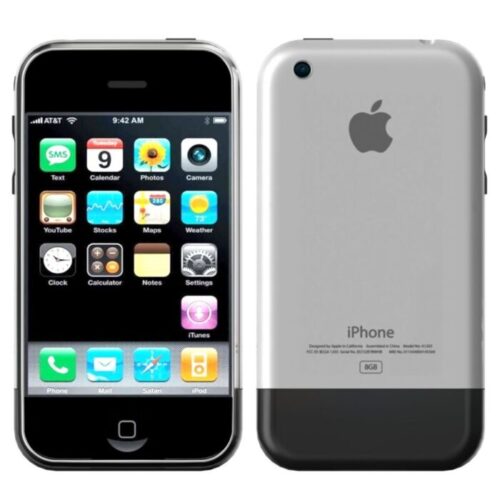 The first iPhone was introduced on January 9 2007 by Steve Jobs. It was the first smartphone to combine a phone music player and internet communicator in one device. The first generation iPhone came with innovative features such as a touchscreen multi touch interface a user friendly interface and integration with many Apple services like iTunes Safari and iCal.
Here are the specifications of the first iPhone:
| Feature | Specification |
|---|---|
| Release date | June 2007 |
| Dimensions | 115 x 61 x 11.6 mm |
| Weight | 135 g |
| Screen | 3.5 inch 320 x 480 px touchscreen display |
| Camera | 2 megapixel |
| Processor | 412 MHz Samsung ARM11 |
| RAM | 128 MB |
| Storage | 4 or 8 GB |
| Memory card slot | None |
| Battery | 1400 mAh |
| OS | iPhone OS 1.0 iOS 1.0 |
While these specifications may seem outdated by modern standards the first iPhone immediately became a style and technology icon. The touchscreen and multi touch interface were revolutionary for their time and remain fundamental features of any smartphone today.
iPhone 3G and iPhone 3GS
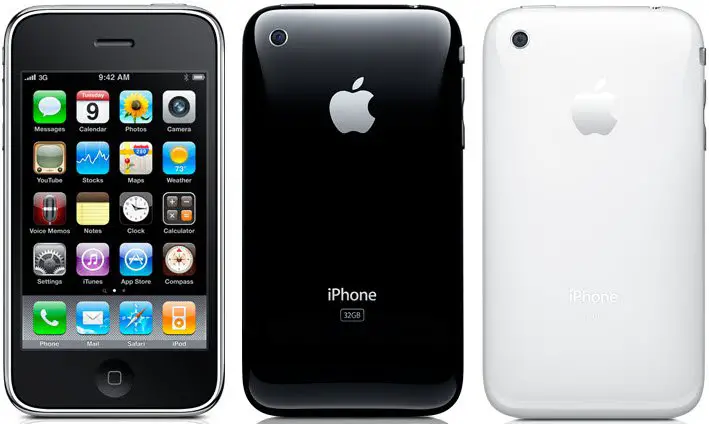
The iPhone 3G was released by Apple in 2008 as the successor to the first generation iPhone. It was the first iPhone to support 3G networks allowing faster internet and app usage. In 2009 the iPhone 3GS was launched with more power and speed than previous models.
Here are the specifications of the iPhone 3G and iPhone 3GS:
| Feature | iPhone 3G | iPhone 3GS |
|---|---|---|
| Release date | July 2008 | June 2009 |
| Dimensions | 115.5 x 62.1 x 12.3 mm | 115.5 x 62.1 x 12.3 mm |
| Weight | 133 g | 135 g |
| Screen | 3.5 inch 320 x 480 px touchscreen display | 3.5 inch 320 x 480 px touchscreen display |
| Camera | 2 megapixel | 3 megapixel with autofocus |
| Processor | 412 MHz Samsung ARM11 | 600 MHz Cortex-A8 |
| RAM | 128 MB | 256 MB |
| Storage | 8 or 16 GB | 8 16 or 32 GB |
| Memory card slot | None | None |
| Battery | 1150 mAh | 1219 mAh |
| OS | iPhone OS 2.0 iOS 2.0 | iPhone OS 3.0 iOS 3.0 |
As seen in the table the iPhone 3GS was significantly more powerful and faster than the iPhone 3G due to a newer and faster processor. It also had a better camera with autofocus and larger storage. Both phones continued to use the first generation iPhone design and Multi Touch technology allowing users to control them with their fingers.
iPhone 4 and iPhone 4S
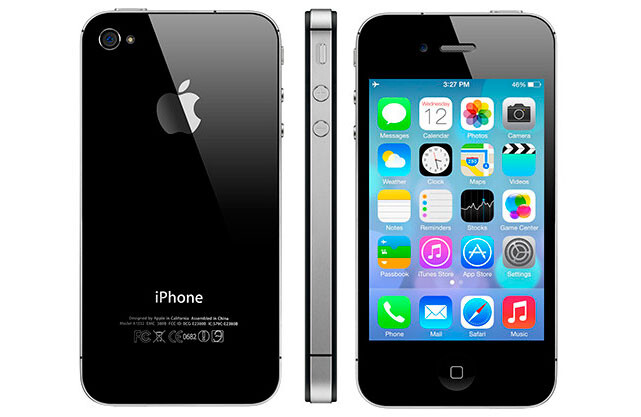
The iPhone 4 was released by Apple in 2010 as a major upgrade over previous models. The iPhone 4S launched in 2011 as an improved version of iPhone 4 with enhanced features and a new OS.
Here are the specifications of the iPhone 4 and iPhone 4S:
| Feature | iPhone 4 | iPhone 4S |
|---|---|---|
| Release date | June 2010 | October 2011 |
| Dimensions | 115.2 x 58.6 x 9.3 mm | 115.2 x 58.6 x 9.3 mm |
| Weight | 137 g | 140 g |
| Screen | 3.5 inch 640 x 960 Retina touchscreen | 3.5 inch 640 x 960 Retina touchscreen |
| Camera | 5 megapixel with autofocus and LED flash | 8 megapixel with autofocus and LED flash |
| Processor | 1 GHz Apple A4 | 1 GHz dual core Apple A5 |
| RAM | 512 MB | 512 MB |
| Storage | 8 16 or 32 GB | 8 16 32 or 64 GB |
| Memory card slot | None | None |
| Battery | 1420 mAh | 1432 mAh |
| OS | iOS 4 | iOS 5 |
As seen in the table the iPhone 4 and 4S featured an improved design and higher resolution Retina display. The iPhone 4S also had a more powerful processor better camera and larger storage. Both models supported Siri the new voice assistant introduced with iOS 5.
iPhone 5 iPhone 5S and iPhone 5C
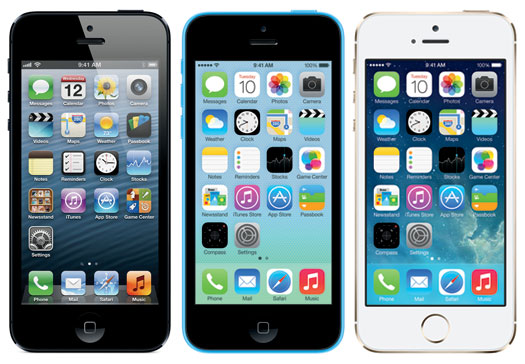
The iPhone 5S was the first iPhone with the Touch ID fingerprint scanner and an updated A7 processor with 64 bit architecture. The iPhone 5C was released as a more affordable option with multiple bright colors and a plastic body.
Both devices were updated to iOS 7 which brought many changes to the design and functionality of the OS.
The iPhone 5 5S and 5C remained popular but were replaced by newer models within a year.
Here are the specifications:
| iPhone 5 | iPhone 5S | iPhone 5C | |
|---|---|---|---|
| Release date | September 2012 | September 2013 | September 2013 |
| OS | iOS 6 | iOS 7 | iOS 7 |
| Dimensions | 123.8 x 58.6 x 7.6 mm | 123.8 x 58.6 x 7.6 mm | 124.4 x 59.2 x 8.97 mm |
| Weight | 112 g | 112 g | 132 g |
| Screen | 4 inch 640 x 1136 | 4 inch 640 x 1136 | 4 inch 640 x 1136 |
| Processor | A6 | A7 | A6 |
| RAM | 1 GB | 1 GB | 1 GB |
| Storage | 16 32 64 GB | 16 32 64 GB | 8 16 32 GB |
| Camera | 8 MP | 8 MP | 8 MP |
| Video | 1080p at 30fps | 1080p at 30fps | 1080p at 30fps |
| Front camera | 1.2 MP | 1.2 MP | 1.2 MP |
| Battery | 1440 mAh | 1570 mAh | 1510 mAh |
| Built in apps | Maps iTunes YouTube Safari Calendar Contacts | Same plus Passbook Camera Siri FaceTime | Same plus iPhoto iMovie Pages Numbers Keynote |
| Color options | Black White | Space Gray Silver Gold | White Pink Yellow Blue Green |
| Touch ID | No | Yes | No |
iPhone 6 and iPhone 6 Plus
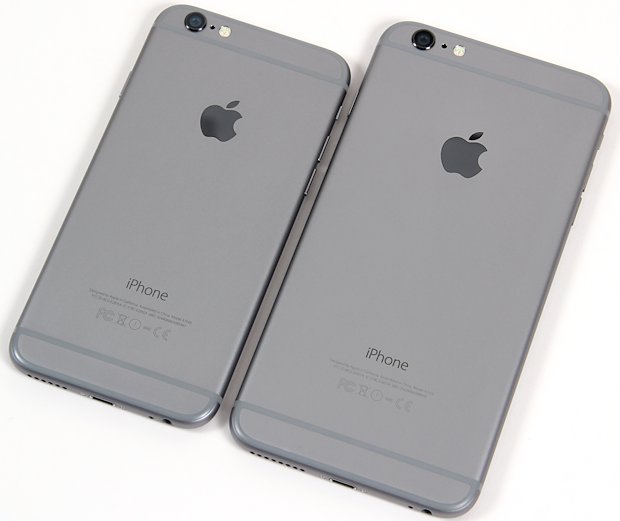
In 2014 Apple presented two new iPhone models the iPhone 6 and iPhone 6 Plus with larger screens and improved features.
Specifications:
| Feature | iPhone 6 | iPhone 6 Plus |
|---|---|---|
| Screen size | 4.7 inch | 5.5 inch |
| Resolution | 1334 x 750 px | 1920 x 1080 px |
| Density | 326 ppi | 401 ppi |
| Processor and chipset | Apple A8 64 bit | Apple A8 64 bit |
| RAM | 1 GB | 1 GB |
| Internal storage | 16 64 128 GB | 16 64 128 GB |
| Rear camera | 8 MP f/2.2 | 8 MP f/2.2 |
| Video recording | 1080p at 60fps | 1080p at 60fps |
| Front camera | 1.2 MP f/2.2 | 1.2 MP f/2.2 |
| Battery capacity | 1810 mAh | 2915 mAh |
| Dimensions (WxHxD) | 67 x 138.1 x 6.9 mm | 77.8 x 158.1 x 7.1 mm |
| Weight | 129 g | 172 g |
| OS | iOS 8 upgradable to iOS 12.5.5 | iOS 8 upgradable to iOS 12.5.5 |
The iPhone 6 and 6 Plus were the first iPhones with screens over 4 inches and support for Apple Pay and NFC. They also had improved cameras and video recording capabilities. Both had the new Apple A8 processor and faster performance than previous models.
iPhone 6s and iPhone 6s Plus
The iPhone 6S and 6S Plus were released in 2015 as the next generation after the iPhone 6 and 6 Plus. They introduced several improvements over the previous model including a more powerful processor improved camera and 3D Touch technology which allows the screen to sense pressure.
Specifications:
| Feature | iPhone 6S | iPhone 6S Plus |
|---|---|---|
| Release date | September 2015 | September 2015 |
| OS | iOS 9 | iOS 9 |
| Processor | A9 64 bit with M9 coprocessor | A9 64 bit with M9 coprocessor |
| Screen | 4.7 inch Retina HD | 5.5 inch Retina HD |
| Screen resolution | 1334 x 750 px | 1920 x 1080 px |
| Camera | 12 MP rear 5 MP front | 12 MP rear 5 MP front |
| Video recording | 4K at 30fps 1080p at 60fps | 4K at 30fps 1080p at 60fps |
| 3D Touch | Yes | Yes |
| Touch ID | Yes | Yes |
| Wireless | Wi-Fi Bluetooth 4.2 NFC for Apple Pay | Wi-Fi Bluetooth 4.2 NFC for Apple Pay |
| Battery life | Up to 14 hours talk time on 3G | Up to 24 hours talk time on 3G |
| Dimensions | 138.3 x 67.1 x 7.1 mm | 158.2 x 77.9 x 7.3 mm |
| Weight | 143 g | 192 g |
As you can see the iPhone 6S and 6S Plus received significant improvements over the previous generation.










Be First to Comment